

Pantry Politics
On vanilla beans, harissa, heirloom Le Creusets, and the dissonance of who should have nice things

Noise and Access - The Unspoken Truth
A few months back, I posted on my Threads feed a photo with the caption,
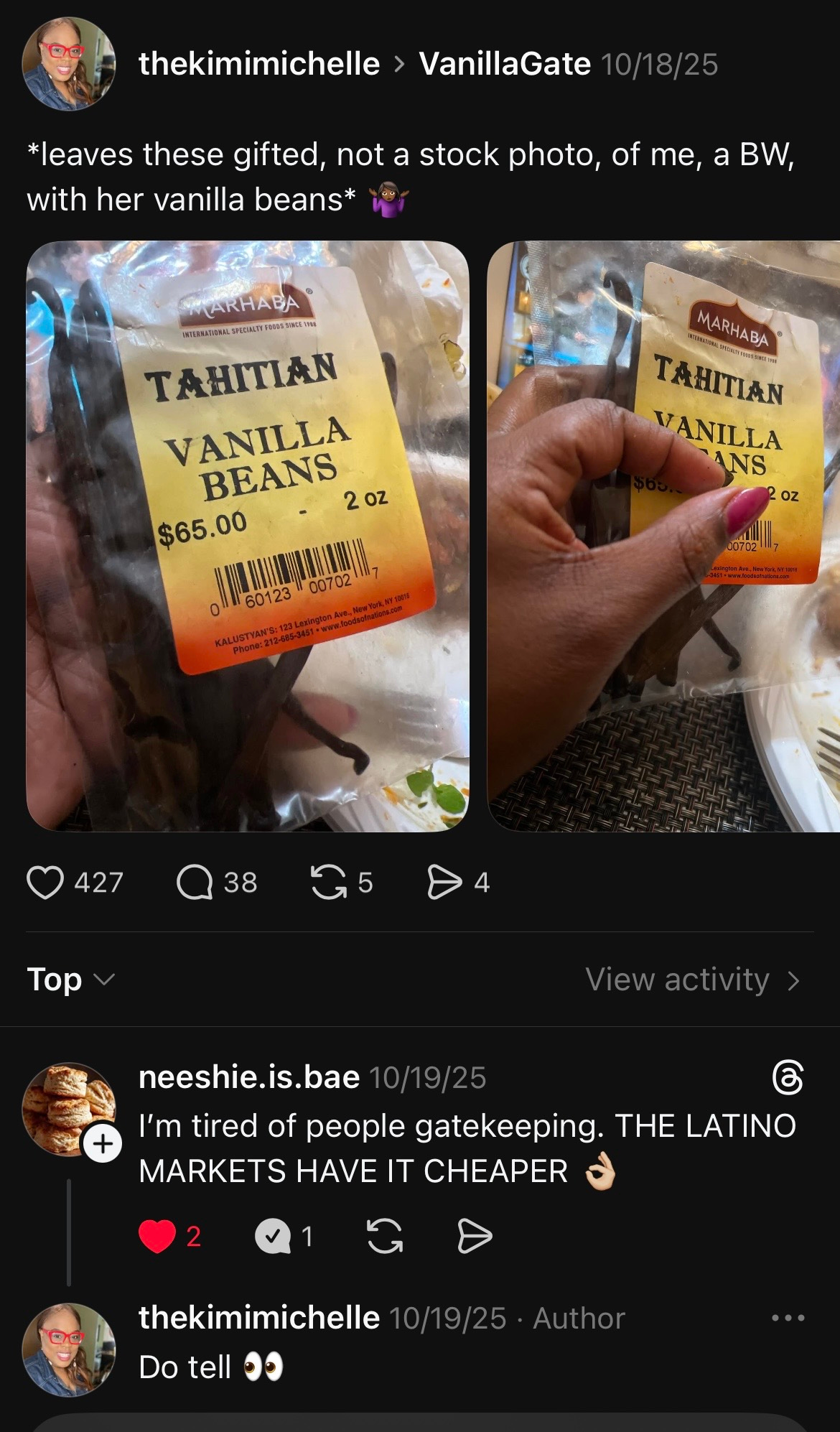
“leaves these gifted, not a stock photo, of me, a BW, with her vanilla beans”
426 likes and over 37,000 views later, I had an inescapable thought…accessibility and luxury are “supposed to” have a specific type of face, and people often speak from their own biased lens, whether intentional or not, as well as from their own insecurities about what that accessibility should look like.
I wound up thinking about this again a few months later, when I saw a post on Instagram about harissa, dates, and recession meals, and how the creator got criticized for saying that harissa & dates could even be considered accessible, even as he explained that it was what he grew up with.
So, of course as most things with food tend to do, it got me to thinking:
What does accessible look like from a cultural perspective as opposed to an economic one?
A’ight, so boom.
I should probably start by giving some context, right? Lemme see how I can do that without going too deep down the proverbial rabbit hole…and depending on how long you’ve been over here at the kitchen table with me, you know that me and my ADHD can go there.
But anyway.
Threads is probably my favorite social media platform, next to YouTube. YouTube appeals to me because of the long form content - I like things that make me think. Threads is appealing for similar reasons…it gives me the space to freeform thought, kind of like Twitter did back in the day.
And yes. I know the platform is called X now, but…I’m always gonna call it Twitter.
So around the middle of October, I was scrolling through Threads, engaging with random food and political content as I tend to do, when I came across a trending topic that had me raise my eyebrow. A Black author, Olive Winter (a lovely and talented author, by the way), posted that she’d received a gift of vanilla beans and oxtail from an appreciative neighbor, and Olive, excited and simply sharing, posted a photo of the vanilla bean and moved on with her life.
She came back to Threads hours later to complete chaos.
Apparently, someone did not believe that she’d received said vanilla beans. They thought it was staged to promote her book, because she also…chose to promote her book in the same thread.
Absurd as that may seem, the debacle became so charged that poor Olive began to receive de@th threats, and with droves of Black women coming to defend her, Threads disabled her account temporarily.
All because she posted about vanilla beans she’d received as a gift.
The ensuing brouhaha (it got so intense that it became called VanillaGate) began to snowball because the woman who didn’t believe she’d received the gift, began recruiting others to discount her. The bigger problem? These women were all white.
So, of course, Black women (myself included) jumped in to defend and bear witness. Because who turns a beautiful gift into a whole thing? All because you don’t believe it likely that she received it?
(Also, as a sidebar…it’s always gonna be defend/support/protect Black women over here.)
A Pattern Emerges
This particular thread stood out to me because there tends to be a lot of discourse about things deemed luxury when it comes specifically to people who don’t fit a particular description of what luxury (or accessibility) should look like.
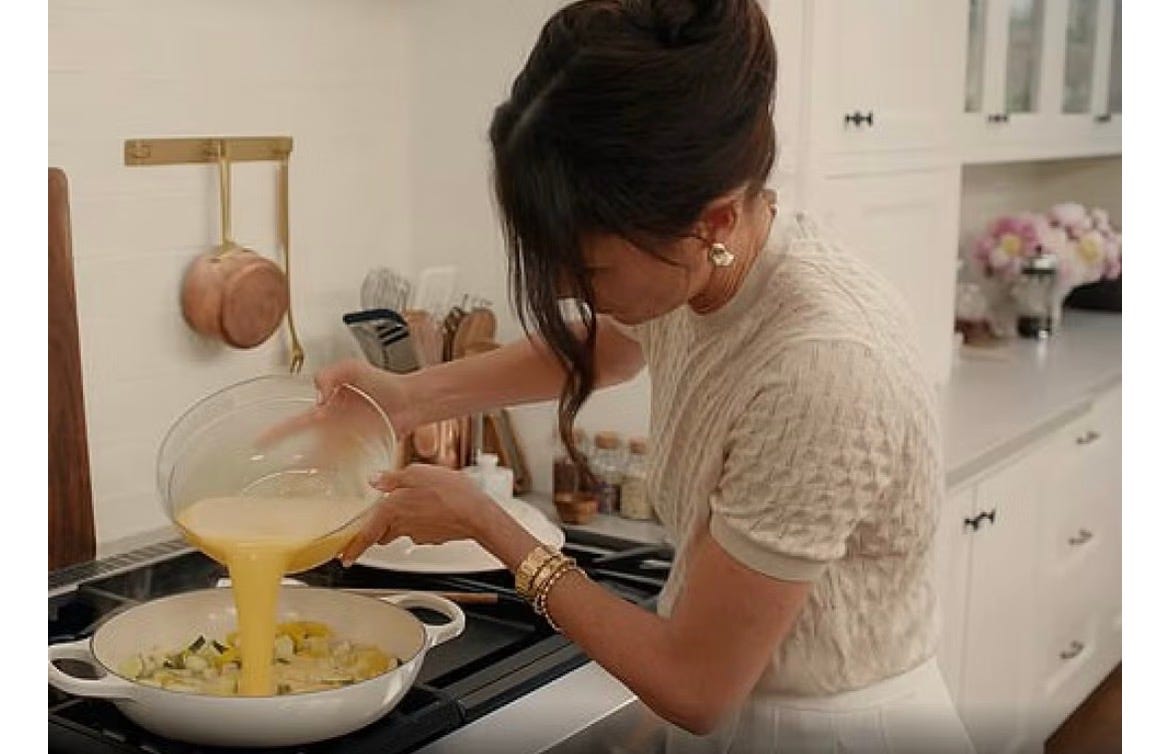
It made me think about Meghan Markle, and how her Netflix cooking show featured her cooking in her Le Creuset dutch oven, and the backlash she received for, well, using it. She was made to be too rich and out of touch.
Meanwhile - she made pasta in it for one episode. A frittata for another.
Neither dish cost more than $20 to make in total.
As with VanillaGate, Black women began to share their own Le Creuset cookware, pointing out that there were many ways to obtain it at accessible prices, or even as a passed-down heirloom, considering that Le Creuset is extremely durable and long lasting. The discourse got so charged that even People magazine did a feature on it.
It begs the question: is the issue that these items are inaccessible unless you fall into a specific financial bracket? Or is the underlying issue who now has access?
The Reframe
Which brings me to the harissa bean and date dish.
Nasim Lahbichi, a Puerto Rican and Moroccan culinary creative and recipe developer from Brooklyn, posted a recipe for his Sticky Harissa Date Beans on Instagram and received backlash for calling the meal a “recession meal.” The reason? Harissa and dates can be pricey - ergo not recession friendly.
Except…as Lahbichi explains, he grew up in a household where he was not well off by any means, but where both harissa and dates were pantry staples because of his Moroccan heritage.
When I came across the post, I immediately thought, “oh! That’s a dope way to stretch a bean.” It made me think about how my dad would make corned beef in a savory, ketchup-y pepper and onion gravy, adding beans to stretch it into a meal that could last a couple of days. My favorite was when he added baked beans - I’ve always leaned sweet and savory. We call it bully beef in the Caribbean.
I even started thinking about using gochujang in place of the harissa, because the idea was the same, right?
Pepper paste + make it saucy + add a fragrant topper.
And, because I love Korean food, gochujang lives in my fridge the same way ketchup might in someone else’s.
That’s pretty easy and straightforward, right?
And as I listened to Nasim talk through his reframing of the dish…it got me thinking about the whys and hows of accessibility across cultures. Mainly, how all these scenarios boil down to two things, both spoken and unspoken: these are items considered luxurious to American palates, and there is a general sense of surprise when Black and Latino people have access to certain pantry ingredients.
I started to soften the language at first…but that’s the thing about examining (and dismantling) a system.
You can’t dismantle something you can’t (or won’t) identify.
My Kitchen Table
Within these scenarios, there are identifiable lenses that show us exactly where the disconnect lives. But first…let me show you my table.
In the comments of the sticky harissa beans post, one person said:
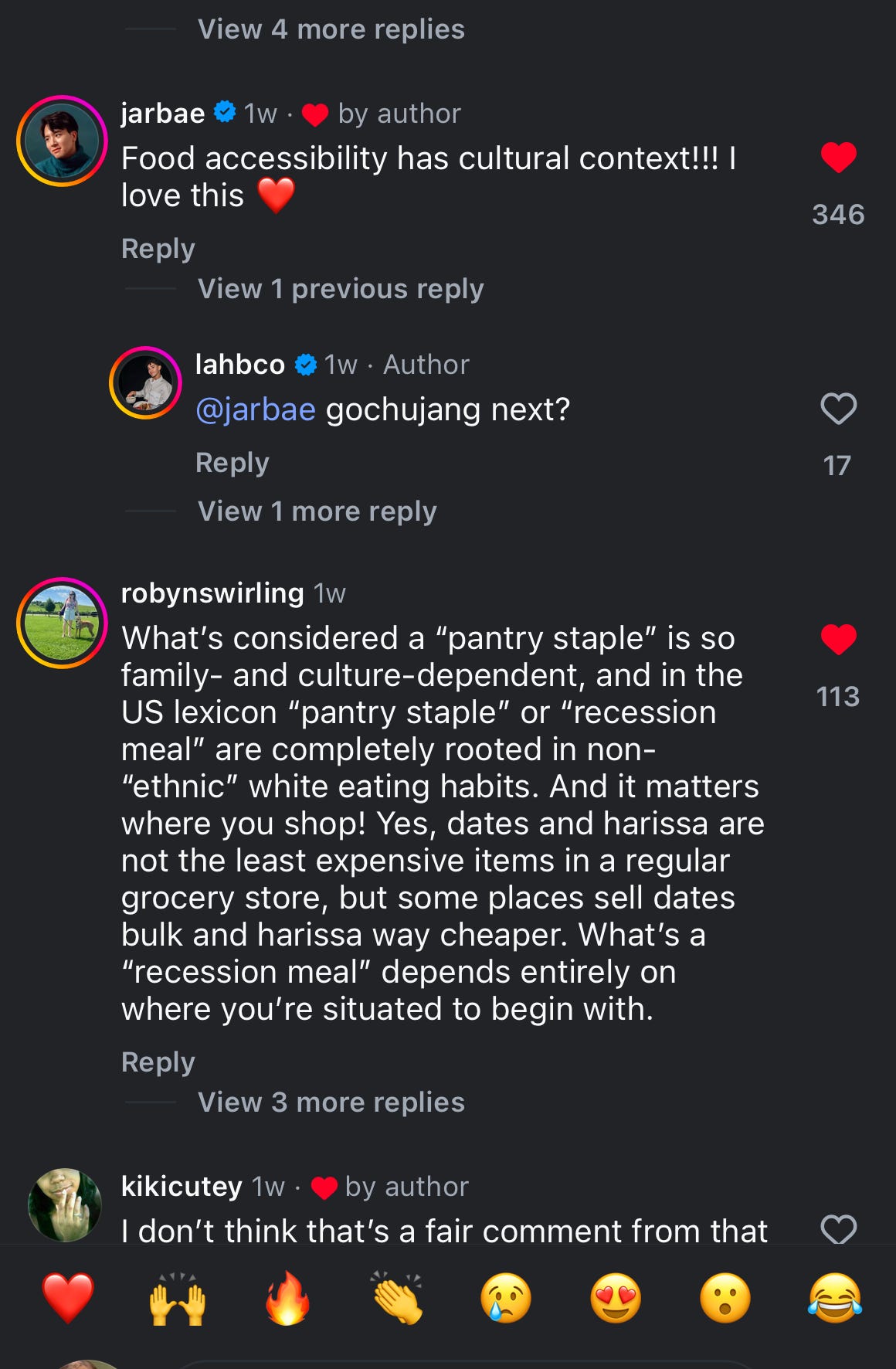
And to me, that’s exactly where my mind went.
Growing up, fresh fish, certain kinds of fish roe, mangoes in abundance, quality cocoa from Trinidad…these were standards in my household. So was stretching a can of corned beef. And Kraft macaroni and cheese, or Krasdale in some cases. There was even an extended government cheese in the big white box period. Pancakes for dinner.
(Maybe not corned beef so much anymore…but that’s a different conversation.)
My parents are both from the Caribbean, Trinidad and Barbados, to be exact. Working class their whole lives, both RNs who saved every penny and worked nights for the first ten to twelve years of my life. My brother and I grew up in Brooklyn; most of my adolescence was spent in pre-gentrified East Flatbush and Bushwick.
The “luxury” items? We got them because my mother prioritized the Asian grocery stores down on Flatbush or Fulton, picking up as much as she could afford so the produce or seafood at home was reminiscent of what she grew up with in her backyard. We pickled and preserved fruit all the time to let it stretch further.
The fish came from my dad, an avid fisherman since his days in Trinidad, who would save up to go off the coast of Massachusetts with his good friends and bring back as much as they’d allow…months worth, cleaned and filleted and stored in a deep freezer built specifically for that purpose. If he was lucky, a wayward lobster or two, and we’d have a luxurious Sunday breakfast.
I share my lived experience because if I told any of those stories today, and coupled it with being working class, I’d likely receive backlash similar to the other creators.
Three Ways to See It
There’s always a lot of noise when it comes to what certain pantries should look like across different communities. But if you listen closely enough, you’ll hear the whisper underneath that’s actually rather loud.
Accessibility discourse almost always imagines a specific kind of household. A specific kind of table. And that table gets called universal, usually by a very particular standard (read: Anglo Saxon) without accounting for the fact that the population it’s supposedly speaking to has never actually looked like that one image. Not really.
And it’s looking less and less like it every day.
Which means the conversation has to shift. Whether everyone’s ready for that or not.
When I think about the disconnect, I think about it through three lenses:
The Economic Lens
This is usually where the conversation starts…and sometimes, where it stops. Budgets are real, and the economy, despite the current administration’s claims to the contrary, is complete trash.
I get it.
But reducing accessibility to only economics is where the convo goes left. Price is relative, and often culturally so. Harissa isn’t a luxury if it’s always been in your family’s pantry. A Le Creuset isn’t inaccessible if it was your grandmother’s, passed down because the thing simply refuses to die - or if you grabbed one on sale.
(Living luxuriously while Black or Latino? Completely separate conversation. It’s coming, though.)
Assuming inaccessibility based on price point alone paints an incomplete picture, one that ignores how cultural traditions actively shape a budget, prioritizing the familiar and long-lasting over a cheaper but unfamiliar alternative.
The Geographic Lens
My parents made sure we always lived somewhere where our people were, because it gave us access to our culture - and by extension, our pantry. The Asian grocery stores on Flatbush weren’t a Pinterest hack. That was generational knowledge, community-rooted, passed down. She knew where to go and how to find what she wanted.
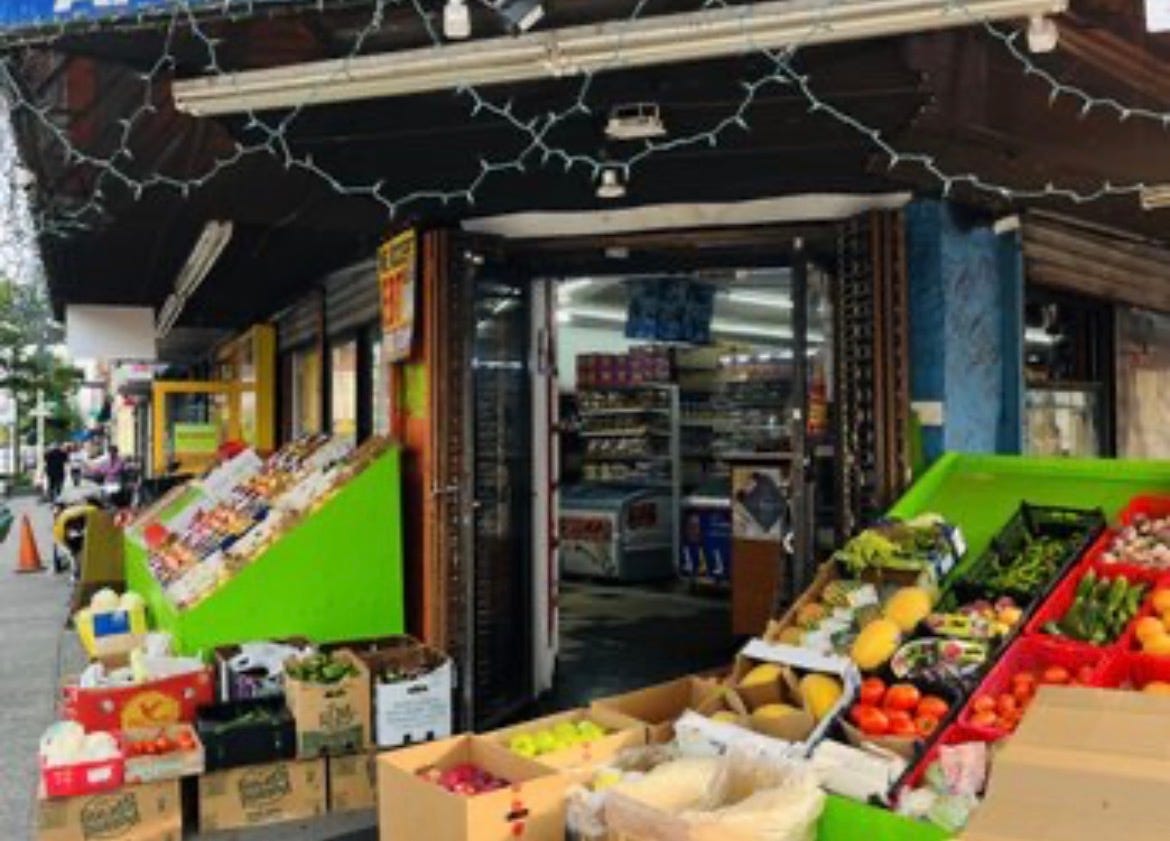
Access isn’t just about how much money you have. It’s about proximity. Knowing which bodega carries the right peppers, which market gets a specific fish in on Fridays, which auntie preserves her own fruit and will give you a jar if you ask right. Geography and community shape what’s “normal” in a pantry in ways a price tag alone cannot explain. When we disregard that, we erase an entire infrastructure of resourcefulness that many communities have been quietly running for generations.
The Cultural Lens
So boom. This is where I need you to lean in.
This is what explains why Olive got death threats over vanilla beans. Why Meghan got dragged for making pasta in a dutch oven. Why Nasim had to justify that his recession meal was, indeed, a recession meal.
Culturally coded ingredients don’t just tell you what someone eats. They paint a picture of who that person is assumed to be. And when the reality doesn’t match the assumption? It creates cognitive dissonance. And honestly, jealousy. Even if people haven’t been able to name it that yet.
Fresh fish and mangoes were staples in my house. So were pancakes for dinner. Both true at the same table, and neither cancels the other out…but try explaining that to an internet that has already decided what your pantry is supposed to look like.
The Gag Is
My dad used to come back from those fishing trips with coolers full of fish, sometimes lobster, and stories for days. My parents would work into the night cleaning, filleting, portioning, storing…making it stretch the way they made everything stretch, with intention and with the lived knowledge of how to make something last.
And if I told that story today, even shared the pictures…somebody would find a way to say I made it up.
That’s the gag right there.
Accessibility isn’t just about what you can afford. It’s about which table gets pictured when we say “everyday ingredients.” It’s about which pantries we treat as aspirational and which ones we call the baseline…and whether we’ve ever stopped to ask ourselves why we drew that line where we did.
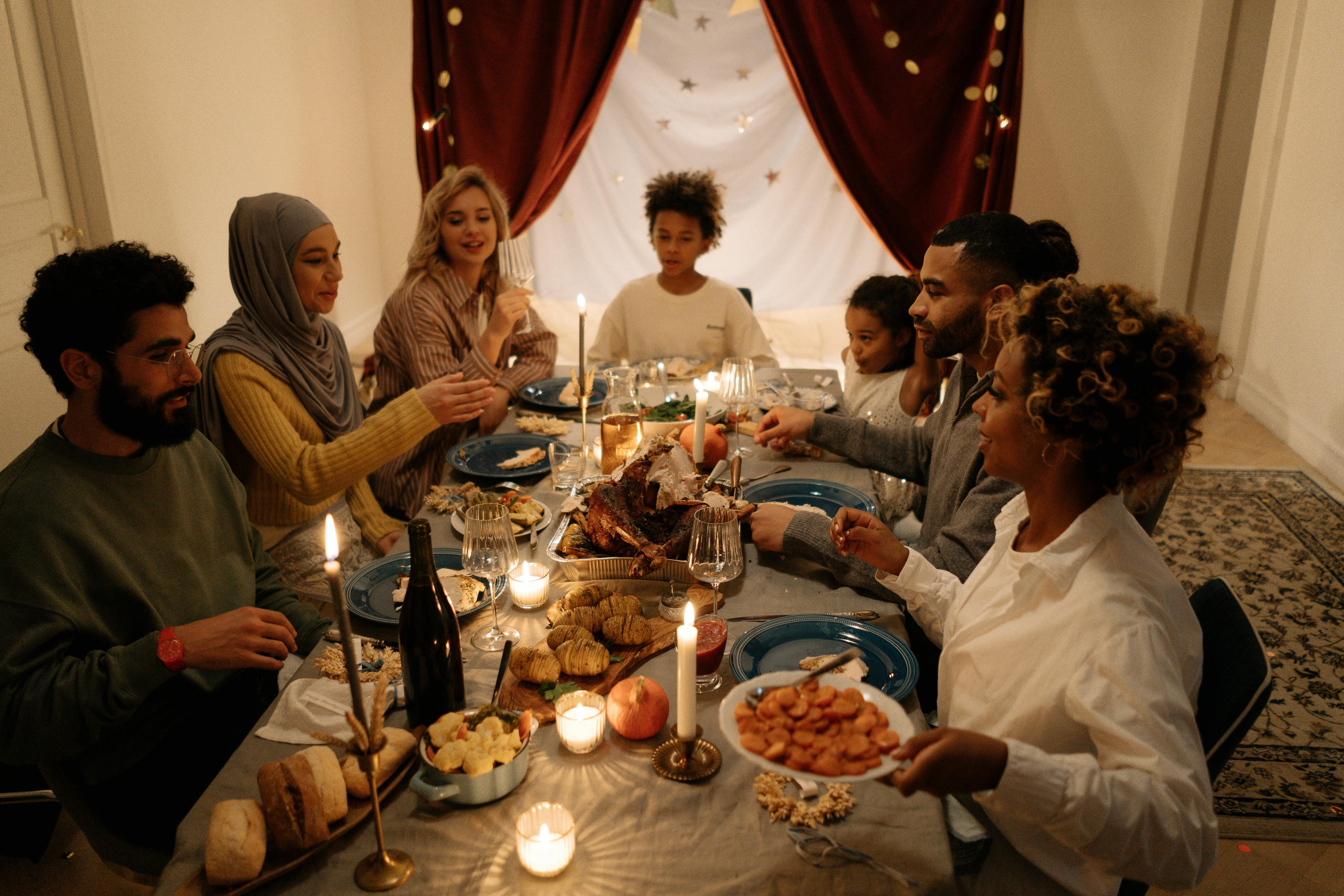
The country is changing. The kitchen table looks different, and not just because the country is changing, but because everyone now has the ability to show their table to the world.
The question is whether the discourse is willing to catch up.